New Construction for Sale in Punta Cana: Trading Evidence for Being First
Search for new construction for sale in Punta Cana and most of what comes back does not exist yet. That is not a warning; it is the shape of the market, and it sets the terms of the purchase. A resale buyer can walk the building and read its records. A new-construction buyer cannot, and in exchange holds things no later owner will. This page sets out that trade from inside one building in Cap Cana, delivered in two phases. It names no other development, prices none and presents no inventory.
What 'new' means when the building is still a drawing
In most markets a new-construction listing is a finished home that nobody has lived in. Here the phrase usually describes a home that is still on paper: a set of plans, a specification and a date. Both kinds are sold under the same words, so the first question to put to any Punta Cana new construction for sale is which of the two it is, because everything a buyer is able to check depends on the answer.
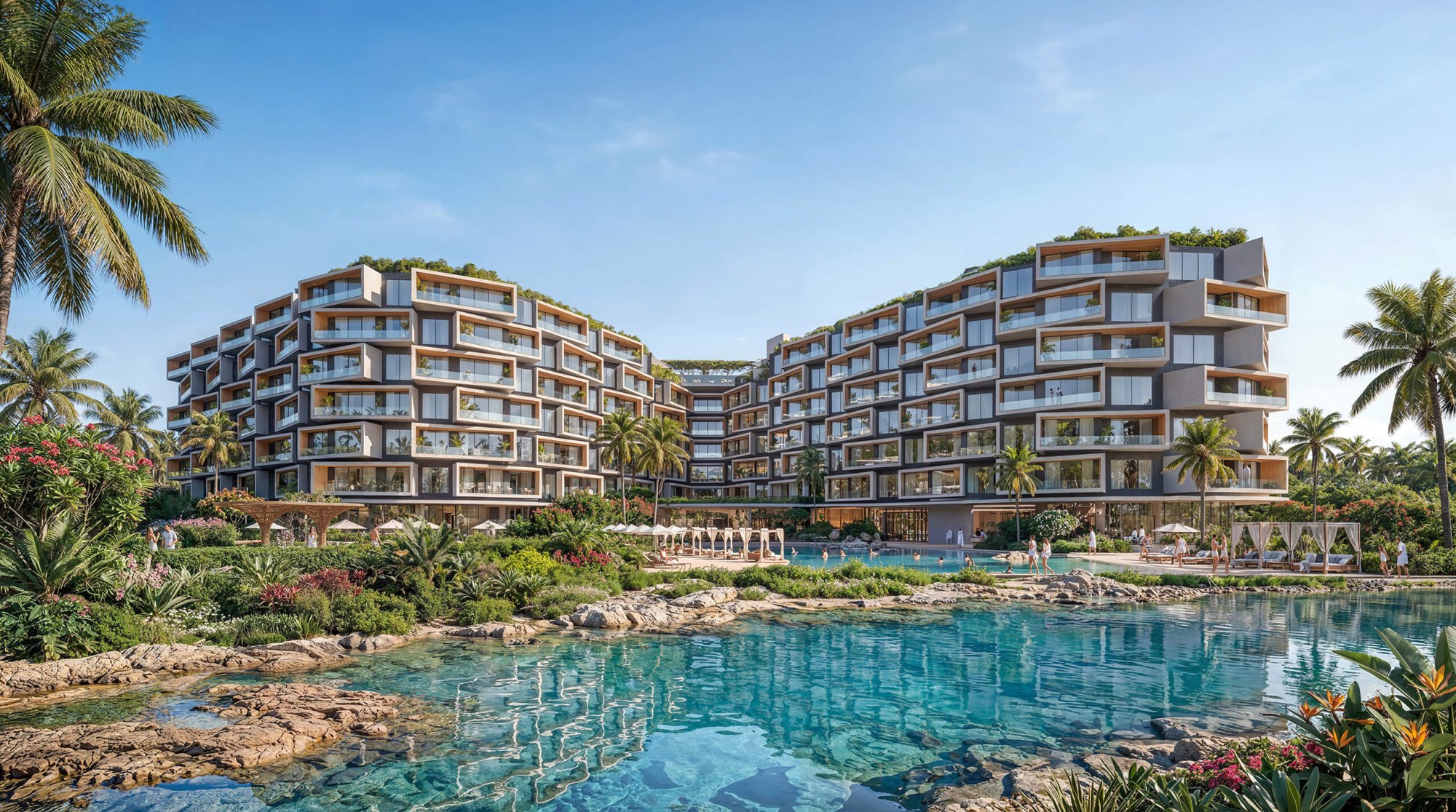
Makai Residences is the second kind. It is 216 residences in Cap Cana, built in two phases, the first handed over in Q2 2028 and the second in Q2 2029. There is nothing to walk through today. So the useful question is not whether the building is good, which nobody can inspect yet, but what a buyer can inspect in its place, and what they receive for accepting that the evidence arrives later.
Three things that belong only to the first buyer
Being first carries three advantages, and none of them survives into a resale.
The first is tax treatment. CONFOTUR, the Dominican tourism-incentive regime, is written for newly built projects, and its exemptions on the buyer's side reach those who buy from the developer; whoever buys the same home from its first owner does not inherit them. They are not automatic either: they have to be filed and recorded on the title. The law's fifteen-year exemption period for qualifying projects is counted from the completion of construction, not from the day a contract is signed, and how it applies to a particular home and owner is a question for your attorney.
The second is choice. A finished building sells whatever is left; a building on paper sells from the whole plan set. Makai publishes 17 layouts of 759 to 1,489 sq ft of constructed area, meaning the interior plus the residence's own terrace, and 90 of the 216 homes were still available when this page was written.
The third is a specified interior. A resale home arrives with a previous owner's decisions in it. Here the residences are delivered furnished, so what you receive is a written specification rather than an inheritance, which makes that specification one of the documents worth reading line by line.
What only a resale can show you, and what to read in its place
The price of being first is evidence. Someone buying in a standing building can ask for things that do not yet exist for one under construction: the condominium regulation as registered, a certification that the common charges are paid up, the minutes of the owners' recent assemblies, and some record of how the home has actually been used. For a new building none of that can be produced, because there is no finished property, no assembly and no history.
That does not leave a buyer empty-handed. Each missing piece of evidence has a paper counterpart that exists before the building does, and the table sets them side by side.
| What a resale buyer can inspect | What the new-construction buyer reads instead |
|---|---|
| The building itself, finished and lived in | The approved construction plans and the written specification of what will be installed |
| The condominium regulation as registered | The draft declaration and regulation; a regime for a building still under way has its own registry route |
| Proof that common charges are paid up, and recent assembly minutes | The title to the land beneath the building and a current certification of its legal status |
| A structure that has already stood through the weather | The edition of the national building code its design was approved under |
| A record of how the home has been used | The operating arrangement as written, and whether the project sits inside a development trust |
Start with the ground, which can be checked in full today
One check can be completed entirely before a floor is poured: the land. Dominican registry law does not allow a condominium to be constituted over land still held as an unlocated quota inside a larger parcel, the arrangement recorded by a constancia anotada. The ground beneath any building that is going to be divided into separately titled homes therefore has to be individualised first, with a certificate of title of its own.
That certificate is the State's own document of ownership, but it is a snapshot of the registry on the day it was printed. For the position as it stands now, including any charge registered against the property, ask for the certification of legal status that the Registro de Títulos issues for a property, at a registry fee of RD$1,000. The registry also keeps a public map of approved parcels. None of this needs the building to exist, which is exactly why it should be settled first.
A classification is a stage, not a stamp
CONFOTUR does not certify a building once and for all. The council approves a tourism project by resolution, and it does so in two stages the ministry names itself: a provisional classification and a definitive one. The definitive stage asks more of the developer, including a current environmental authorisation from the Ministry of Environment and an economic and financial feasibility analysis. Those are the developer's filings, not yours, but they explain what a word like approved can and cannot mean on a brochure.
The practical step is short. Ask for the number and date of the resolution, for Makai as for any building, and check it yourself. The council runs a public consultation page on which a project's classification can be looked up and filtered by stage, by status (approved, rejected or postponed) and by province. A buyer who has read the resolution knows which stage a project has reached; one who has read only the marketing knows which word was chosen.
Why delivery dates move, and what to ask about one
Every off-plan purchase is also a bet on a date, and it helps to know what moves dates at the scale of the whole country. The Banco Central reported that construction contracted 1.8% across 2025, and put it down to an uncertain external environment and relatively high real interest rates, which led private developers to postpone works or carry them out more slowly. The latest monthly reading points the other way: construction grew 14.9% year on year in June 2026. That is one month, measured against a weak month a year earlier, and it is not a rate for the year.
Neither figure says anything about any single building, ours included. What they do show is where to look. The questions that tell you about a particular date are specific ones: what stage the structure has actually reached, and what the contract in front of you says if a date moves, which is a clause to read in the document itself rather than something any guide can generalise. The first contract in an off-plan purchase is usually a promise of sale, which governs the transaction until it is completed but does not itself make you the owner.
The rulebook a building is designed to
A new building is designed to the code in force when its plans are approved, and the Dominican code has just changed. A national building code made official in 2026 sets minimum mandatory requirements for how buildings are analysed, designed and built, and one of its chapters requires every structure, together with its cladding, facade elements and their fixings, to be designed for the wind loads the code prescribes.
That calls for a question rather than an assumption. Ask which edition of the code a building's approved design was prepared under, and treat any wind-speed rating offered in a sales conversation as something for an engineer to confirm. We quote no such rating for Makai: how a particular structure performs is an engineering finding, not a line of marketing copy.
The day the drawing becomes a building
Handover is when the trade settles. Ownership in the Dominican Republic is acquired by registration rather than by signature: the definitive sale contract is registered, and once a building's condominium regime is on the register each separately owned home receives its own certificate of title. The completion of construction is also where the law starts counting the CONFOTUR exemption period, for a project that holds a classification. And from that day the home is a resale to whoever buys it next, with a building and records to inspect and without the first-buyer exemptions.
At Makai that day comes twice, in Q2 2028 for the first phase and Q2 2029 for the second. Until then what we can put in front of you is paper: residences from $329,000, the plan set, the furnished specification, and the record of the developer building it, with more than 15 years of engineering and construction, 4 delivered projects and 3 in progress. Ask for any document in the table above; where one is still a draft, that is what we will call it.
Common questions
- Why is CONFOTUR a new-construction question rather than a resale one?
- Because the regime is written for newly built projects, and its exemptions on the buyer's side reach those who buy from the developer; a later purchaser of the same home does not inherit them. Even for a first buyer they have to be filed and recorded on the title, and the law counts its exemption period from the completion of construction. Ask for the classification resolution's number and date, check it on the council's public consultation page, and take the question of how it applies to your home to your attorney.
- Can I check a new-construction price in Punta Cana against an official index?
- Not in any published form. The house-price index described in the Banco Central's own methodology paper is built from the mortgage-lending records that local lenders report, and it was concentrated on the metropolitan zone of the Distrito Nacional and Santo Domingo because most provinces supplied too few records. It does not cover La Altagracia, where Punta Cana sits, and by construction it can see only homes bought with local mortgage lending. A price here is judged against the specification and the documents, not against an index.
- Does a certificate of title prove the land is free of charges?
- It proves ownership as the registry stood on the day it was printed, and nothing later. For the current position, including any charge registered since, ask for the certification of legal status that the Registro de Títulos issues for a property, at a registry fee of RD$1,000. On new construction that document concerns the land beneath the building, because each separate home receives a certificate of its own only once the building's condominium regime is registered.
- When does a Makai residence stop being new construction?
- When it is handed over: in Q2 2028 for the first phase and Q2 2029 for the second. From then on, anyone buying it from its first owner can walk the building and read its records, but does not receive the first-buyer CONFOTUR exemptions. Until handover Makai sells from its plan set of 17 layouts, delivered furnished, from $329,000.
- Is a building designed today held to a wind standard?
- The Dominican building code made official in 2026 requires structures, their cladding and their facade fixings to be designed for the wind loads it prescribes. Which edition applied to a particular building depends on when its design was approved, so ask. Treat any single wind-speed rating quoted for a specific building as a claim for an engineer to verify; we state none for Makai.
Want the details for your own situation?
Ask about availability, layouts or the buying process, and someone from the sales team will get back to you.
Get in touch