How Dominican capital gains tax meets a Makai resale
Makai Residences hands over its two phases in 2028 and 2029, so any first owner's sale sits years out. What will decide the tax on that sale is settled much sooner: whether you hold the residence in your own name or through a company, whether you live in it or place it in the building's hotel rental program, and what records you keep of a furnished purchase priced in US dollars. This page works through those choices against the rules as they stood after the Dominican reform of June 2026. It is general information, not tax advice; a Dominican tax adviser should confirm your own position before you buy and again before you list.
Where the rule stands after Law 30-26
A capital gain on Dominican real estate is the selling price less the seller's acquisition cost, with that cost indexed for inflation under Article 289 of the Tax Code, Law 11-92. What changed is the rate. Law 30-26, dated 18 June 2026, inserted Article 296-1, under which an individual's gain on a property sale is taxed at 10% and settled once, as a definitive amount kept apart from the annual income-tax scale. The tax authority, the DGII, lists that change as effective immediately in its implementation notice.
Three points sit outside that headline. Property held by a company is taxed at the general corporate rate of 27%, not at 10%. The reform names individuals without saying how it reaches one who is not a Dominican tax resident, so a seller living abroad has to confirm which rate applies to them. And specialist commentary notes that the detail of the base is left to a regulation not yet issued, so any number you sketch today is provisional.
Living at Makai or renting it: why the choice reaches the sale
Makai is set up for two kinds of owner. Some will live in their residence for much of the year; others will place it in the building's single hotel rental program and visit for a few weeks. That difference follows the residence all the way to the sale.
Both exemptions the June reform introduced are built around a habitual residence. One relieves the gain when the money from selling a habitual home goes into another habitual home within six months, in proportion if only part is reinvested. The other relieves individuals over 65 who sell their habitual home. A residence its owner occupies for most of the year is the natural reading of that phrase; a residence that spends most of its year with hotel guests is a much harder case. Neither outcome is settled for any particular owner, so ask an adviser what the DGII would want to see before you count on either.
Tax residence is the second thread. The Dominican test is time spent in the country, generally more than 182 days in a fiscal year, and holding a residence permit does not on its own make anyone a tax resident. An owner who lives at Makai through most of the year may cross that line; one who comes for the winter usually will not, and that answer decides which side of the open non-resident question the sale falls on.
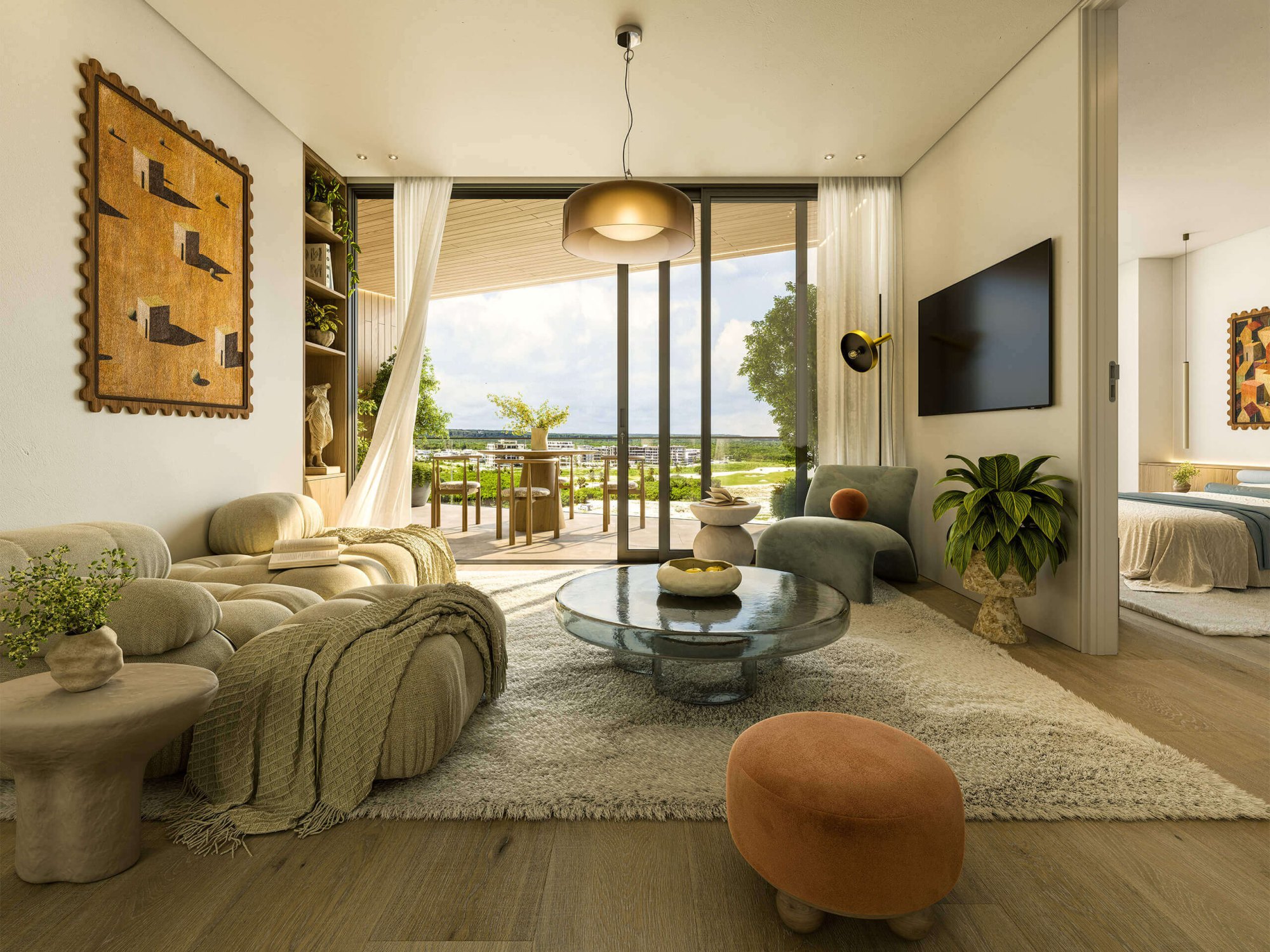
Building the cost side of a furnished, dollar-priced purchase
The lower your recorded cost, the larger the gain, so the cost side is worth assembling with care from the first contract. Makai's residences are listed from $329,000 to $837,000 in US dollars across 17 layouts, and every one is delivered fully furnished. Each of those facts raises a question to put to an adviser at the start rather than at the end.
| Element of the calculation | What the code says | The Makai question to settle early |
|---|---|---|
| Acquisition cost | What you paid, indexed for inflation (Art. 289) | Which date starts the indexing for a purchase signed years before a 2028 or 2029 handover |
| Furnished delivery | No specific rule in the sources read for this page | Whether the furniture inside the price is part of the property's cost or a separate asset |
| Later improvements | Raise the adjusted cost once added to the capital account | Which works after handover count, and which invoices prove them |
| Currency | Not settled by any source read for this page | How dollar amounts at purchase and at sale are carried into a tax administered in pesos |
| Sale price | The top line of the gain | Whether a resale also transfers the furnishings, and how the price is divided |
A Makai residence from contract to sale
The tax is paid at the end, but most of what decides it is fixed along the way. Read the ownership as a sequence and each step has one job.
- At signing Choose who holds the title An individual's gain is taxed at 10% under the reform and a company's at the general rate of 27%. Decide with an adviser before the contract names the buyer.
- 2028 or 2029 Handover of your phase Makai's two phases are planned for handover in 2028 and 2029. Keep the delivery record and the registered title with the purchase contract.
- Each year you own it Count your days, keep your invoices Note the days you spend in the country against the 182-day line, and file every invoice for work that adds to the property.
- Before you list Ask for a written answer The DGII accepts technical consultations on form FI-GLEGA-004 and gives a response time of 22 business days.
- At closing Agree the withholding Where the seller is non-resident, a resident buyer holds back the full tax the sale generates; fix the figure before you sign.
- Within six months Pay and report Specialist readings set the deadline at six months from the completed transfer; individuals report on form IR-1 and companies on IR-2.
Selling from abroad: who withholds, who files
When the seller is not a Dominican tax resident, the DGII describes the tax as paid through a designated withholding agent, and a resident buyer must hold back 100% of the tax the sale generates. That shifts the negotiation: the buyer's side carries the obligation, so it will want the amount fixed before closing rather than after.
The sale belongs on the seller's annual income-tax return, form IR-1 for an individual and IR-2 for a company. A seller who is not registered with the DGII and has no other filing duty can ask the authority to validate the calculation and issue a determination of what is owed. Specialist readings of Article 296-1 put the payment within six months of the completed transfer; confirm the exact trigger with your adviser.
Before the reform, the DGII's published rates ran up to 25% for a resident individual on the progressive scale and 27% for a foreign individual. They describe the position before the June 2026 reform, and whether a non-resident's rate today matches either figure is exactly the question to have answered in writing.
Rental income and the gain are taxed separately
An owner who rents through the hotel program meets a different tax every year, long before meeting this one at the sale. For a non-resident, rental income carries a 27% withholding applied to gross receipts, with no deductions, and that withholding is final; rates change, so confirm the current figure. Short-term stays also carry ITBIS at 18%, owed by the owner hosting the stay rather than by the platform taking the booking.
The developer's projected 7-11% annual return is a projection, not a guarantee, and it describes running the residence, not selling it. The published projection does not say whether it allows for the yearly withholding, so ask the developer how it was built, and model the tax on an eventual gain on its own.
CONFOTUR, the tourism incentive of Law 158-01, works on the purchase and holding side: for the first buyers of a classified project it exempts the 3% transfer tax and the 1% annual IPI. The sources behind this page name no relief on a capital gain. Its benefits also belong to first acquirers from the developer, so the person who later buys from you does not inherit them, which they will weigh when they price your residence. Ask Makai for its classification resolution rather than assuming a status.
Common questions
- Is the 10% rate added to my income tax for the year of the sale?
- No. Under Article 296-1, added by Law 30-26, an individual's gain on a property sale is settled once at 10%, separate from the annual income-tax scale. The sale is still declared on the yearly return, and a seller living abroad should confirm in writing that the 10% rate reaches them.
- Would owning my Makai residence through a company change the tax on a sale?
- Yes, materially. The 10% rate is written for individuals; a company that sells is taxed on its gain at the general corporate rate of 27%. A company may still suit other goals, so make the choice with an adviser before the purchase contract names the buyer.
- If I rent my residence through the hotel program, can I use the habitual-residence exemptions?
- Treat it as an open question. Both exemptions the reform created, reinvestment within six months and the sale of a habitual home by an individual over 65, are framed around a habitual residence. Whether a residence let to hotel guests for much of the year counts is for an adviser, and if needed the DGII, to answer.
- Does the furniture in a Makai residence count toward my cost?
- No source read for this page settles it. Every Makai residence is delivered fully furnished, so ask an adviser at purchase how the price should be recorded between the property and its contents, and keep the contract schedule listing what is included.
- How can I get the DGII's view of my own case before selling?
- File a technical consultation on form FI-GLEGA-004. The DGII states a response time of 22 business days, so lodge it well before you plan to list.
Want the details for your own situation?
Ask about availability, layouts or the buying process, and someone from the sales team will get back to you.
Get in touch